Introduction
In the competitive world of industrial construction, time is money. Delays in project completion can lead to increased labor costs, missed operational deadlines, and financial penalties. One of the most effective ways to accelerate construction while maintaining structural integrity is through the use of sandwich panel systems (also known as composite panels). These innovative building materials can reduce construction timelines by up to 30%, making them a game-changer for large-scale industrial projects.
This guide explores how sandwich panels streamline construction processes, their key advantages over traditional methods, and real-world applications that demonstrate their efficiency.
Why Sandwich Panels Speed Up Industrial Construction
1. Prefabricated Design Reduces On-Site Labor
Unlike traditional brick-and-mortar or steel-and-concrete construction, sandwich panels are pre-engineered and prefabricated off-site. This means walls, roofs, and even partitions arrive at the construction site ready for installation, eliminating time-consuming steps like curing, welding, or bricklaying.
- No curing time: Unlike concrete, which requires days or weeks to set, composite panels are installed immediately.
- Minimal welding/bolting: Since panels are lightweight and interlock seamlessly, assembly is faster than structural steel framing.
- Reduced manpower: Fewer workers are needed compared to traditional construction, lowering labor costs.
2. Lightweight Yet Strong – Faster Handling & Installation
Sandwich panels consist of two metal facings (usually steel or aluminum) with an insulating core (polyurethane, PIR, mineral wool, or EPS). This composite panel structure provides high strength-to-weight ratios, allowing:
- Easier transportation: Lighter than concrete or solid steel, reducing logistics time.
- Quick lifting & positioning: Cranes and forklifts can install panels rapidly without heavy machinery.
- No need for additional structural support: The panels are self-supporting, eliminating secondary framing requirements.
3. Integrated Insulation – No Additional Steps
Traditional industrial buildings require separate insulation installation, adding weeks to the schedule. Sandwich panels come with built-in thermal and acoustic insulation, meaning:
- No post-construction insulation work – saving time and labor.
- Immediate weather protection – allowing interior work to start sooner.
- Energy efficiency compliance from Day 1 – no retrofitting needed.
4. Simplified Cladding & Roofing Process
With composite panels, walls and roofs are installed in a single step, unlike traditional methods that require multiple layers (structural frame, sheathing, insulation, and cladding). This all-in-one approach means:
- Faster enclosure: The building becomes weatherproof quickly, enabling interior fit-outs to begin earlier.
- Fewer subcontractors needed: No separate teams for framing, insulation, or cladding.
- Seamless joints: Pre-designed interlocking systems prevent leaks and reduce adjustment time.
5. Reduced Foundation & Structural Load
Because sandwich panels are significantly lighter than concrete or steel structures, they require:
- Simpler foundations: Less excavation and curing time for footings.
- Smaller support structures: Columns and beams can be optimized, cutting material and erection time.
- Lower seismic loads: Reduced weight means less stress on the building during earthquakes, simplifying engineering approvals.
Case Study: 30% Time Savings in Real Projects
Project: Automotive Manufacturing Plant
- Traditional Construction Estimate: 12 months
- With Sandwich Panels: 8.5 months (29% faster)
Key Time-Saving Factors:
✔ Walls & roof installed in 3 weeks (vs. 3 months for conventional methods)
✔ No separate insulation phase – saved 4 weeks
✔ Early interior works began 6 weeks sooner
Project: Food Processing Facility
- Traditional Timeline: 10 months
- Sandwich Panel Timeline: 7 months (30% reduction)
Key Benefits:
✔ Hygienic, pre-finished surfaces required no additional coatings
✔ Rapid temperature control (critical for food storage) achieved immediately
✔ No delays due to weather – panels installed in all conditions
Additional Advantages Beyond Speed
While the primary focus is on fast-track construction, composite panels also offer:
✅ Lower lifetime maintenance costs (corrosion-resistant, durable finishes)
✅ Energy savings (superior insulation reduces HVAC loads)
✅ Design flexibility (custom lengths, colors, and profiles available)
✅ Sustainability (recyclable materials, reduced waste)
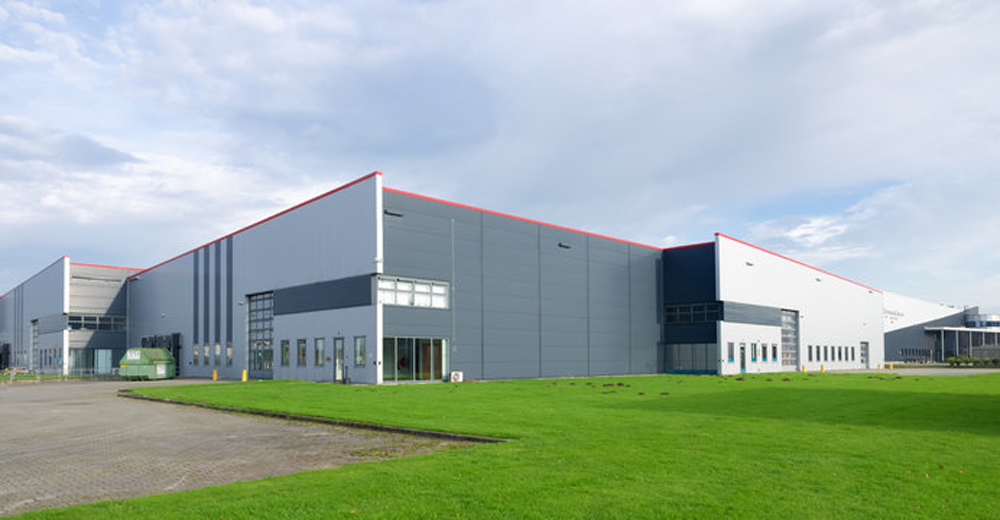
Conclusion: Why Sandwich Panels Are the Future of Industrial Construction
For developers and contractors looking to slash construction timelines without compromising quality, sandwich panel systems are the optimal choice. By integrating structure, insulation, and cladding into a single component, composite panels eliminate multiple construction phases, reduce labor dependency, and accelerate project delivery.
The evidence is clear: companies adopting sandwich panels for large industrial plants consistently achieve 30% faster completion, translating to earlier occupancy, lower financing costs, and quicker ROI.
Is your next industrial project on a tight schedule? Consider sandwich panels – the smart way to build faster, smarter, and more efficiently.