
Introduction:
When uncompromising thermal efficiency is the primary requirement, Polyurethane Foam (PUF) panels emerge as the undisputed leader. A specific and highly effective type of sandwich panel, PUF panels are the backbone of industries where temperature control is critical. This article explores why PUF panels are the ideal solution for cold storage, food processing plants, pharmaceutical warehouses, and any structure where energy conservation is paramount.
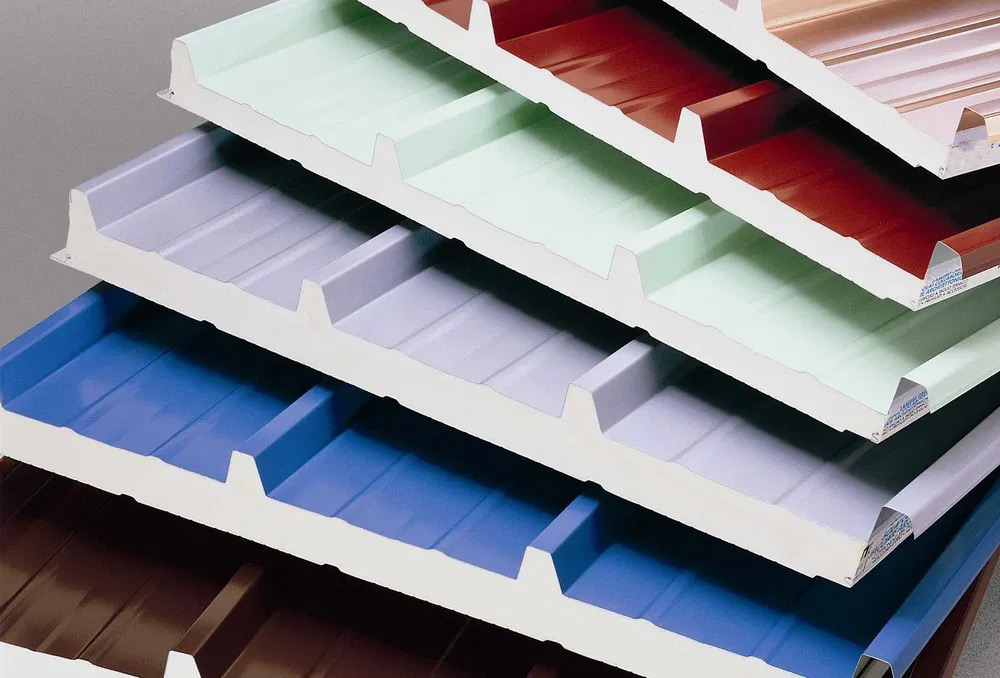
The Science Behind the Superior Insulation
The secret to a PUF panel’s performance lies in its core. The polyurethane foam is a closed-cell structure filled with inert gas bubbles that have low thermal conductivity. This structure creates a powerful barrier against heat flow, measured by a high R-value (resistance to heat flow) or a low U-value (rate of heat transfer). Simply put, PUF panels provide the highest level of insulation for the least thickness compared to other core materials like EPS or Mineral Wool. This allows for more internal space in a cold room without sacrificing insulation performance.
From a Manufacturing Perspective: Precision and Quality
The production of PUF panels is a highly controlled process. The two liquid components—polyol and isocyanate—are precisely metered, mixed, and injected between the two metal facings as they move through a continuous double-belt laminator. The chemical reaction causes the mixture to expand and foam, perfectly bonding to the skins under heat and pressure. This continuous process ensures a consistent cell structure, uniform density, and eliminates the risk of weak joints or thermal bridges that can occur in discontinuous production.
Key Applications: Where PUF Panels are Non-Negotiable
- Cold Rooms and Walk-in Freezers: From small restaurant storage to massive logistics hubs for frozen goods.
- Food Processing Plants: Maintaining hygienic, low-temperature environments for production and packaging.
- Pharmaceutical Storage: Preserving vaccines, medicines, and chemicals that require strict temperature control.
- Temperature-Controlled Warehouses & Logistics: Ensuring the integrity of perishable goods throughout the supply chain.
- Energy-Efficient Buildings: Increasingly used in commercial and even residential buildings to achieve high energy efficiency standards like Passive House.
Advantages Beyond Just Insulation
While thermal performance is their main claim to fame, PUF panels offer other significant benefits:
- Hygienic and Easy to Clean: The seamless, joint-free surface and non-porous metal facings prevent moisture ingress and bacterial growth, making them easy to sanitize.
- Structural Strength: The rigid foam core bonded to steel skins creates a panel that can withstand significant loads and impacts.
- Lightweight: Reduces the structural load on the building, leading to potential cost savings in the supporting framework.
Conclusion
PUF panels are a specialized, high-performance building solution where thermal integrity cannot be compromised. Their superior insulating power, combined with structural benefits and hygienic properties, makes them the default choice for the cold chain industry and a powerful tool for architects designing the next generation of ultra-efficient buildings.