
In the global composites market—where material stability, mechanical strength, and long-term sustainability determine competitive advantage—PET foam has become one of the most in-demand core materials for sandwich structures. For manufacturers of composite panels, wind blades, marine structures, automotive parts, and industrial laminates, understanding the PET Foam Core Price and the variables that influence it is essential for cost planning and supply-chain optimization.
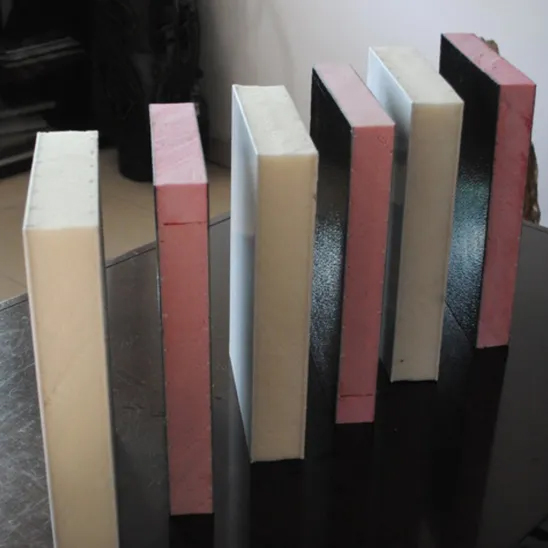
As a professional PET foam manufacturer with large-scale production capacity, we offer bulk buyers and OEM clients high-consistency foam cores engineered for structural strength, thermoformability, and multi-process compatibility. This article provides a comprehensive breakdown for decision-makers evaluating PET foam core pricing, production capabilities, and long-term supply partnerships for large-volume procurement.
1. Why PET Foam Core Demand Continues to Grow
PET foam (polyethylene terephthalate) has rapidly become a mainstream core material across the composites industry due to its superior environmental profile and mechanical performance.
Key advantages driving global adoption:
- 100% recyclable and sustainable
- Good compressive and shear strength for structural components
- Uniform cell structure providing predictable mechanical behavior
- Thermoformable and compatible with most composite processes
- Excellent fatigue resistance compared to PVC and other legacy cores
- Chemical resistance and hydrolytic stability suitable for humid and marine environments
- Cost-effective alternative to PVC, SAN, honeycomb, and other cores
As industries shift toward greener and more efficient materials, PET foam continues to replace older and more expensive core materials—making the PET Foam Core Price a central purchasing concern for distributors and industrial buyers.
2. What Determines PET Foam Core Price in Bulk Orders?
Bulk procurement of PET foam cores involves multiple cost variables. Understanding these factors helps buyers plan more effectively for both short-term purchases and long-term supply contracts.
1. Density Grades (Major Price Determinant)
Common PET densities include:
- 70–90 kg/m³ for lightweight structural applications
- 100–120 kg/m³ for automotive, marine, and industrial panels
- 130–200 kg/m³ for high-strength load-bearing applications
Higher density = higher raw material usage and compression strength, resulting in higher cost.
2. Thickness Requirements
PET foam sheets are typically available in:
- 5 mm to 100 mm
- Special thicknesses for wind energy and marine industries
Thicker sheets require more material and longer production cycles.
3. Surface Type (Plain, Grooved, Perforated, Scored)
Additional processing—especially for vacuum infusion or resin flow enhancement—adds moderate cost.
4. Required Tolerances and Mechanical Specifications
OEMs requiring tight tolerances or enhanced mechanical performance (e.g., higher shear modulus) influence the final pricing.
5. Order Volume
Large volume orders significantly reduce PET Foam Core Price, especially when:
- Filling multiple containers
- Negotiating quarter-year or annual purchase contracts
- Ordering OEM-branded or private-label production
6. Processing Method Compatibility
PET foam cores designed for:
- Vacuum infusion
- RTM and LRTM
- Prepreg laminating
- Hot-press forming
…require different production formulas, which can affect cost.
7. Shipping Destination and Logistics
PET foam is lightweight but volumetric, making freight optimization critical. For large-volume buyers, we offer:
- Space-efficient packing
- Mixed-size loading
- Consolidated OEM shipments
- Export documentation for global destinations
The more stable the order plan, the more favorable the shipping and manufacturing cost.
3. Our Factory Production Strength for PET Foam Cores
As a dedicated PET foam producer, we operate modern production lines engineered for continuous, uniform, and high-output foam manufacturing.
Key factory advantages:
• High-capacity continuous foaming lines
Ensure stable density, uniform cell structure, and consistent mechanical properties.
• International quality standards
Compliant with:
- ISO 9001
- European composite standards
- Marine and wind-energy requirements
- REACH & RoHS
• Large sheet sizes & custom production
We supply:
- Standard sheets
- CNC-cut blocks
- Custom-profiled cores for OEM applications
• OEM & Private Label Ready
Most PET foam customers prefer white-label production to support global distribution or in-house branding.
• Flexible supply-chain support for long-term partners
Including:
- Yearly pricing agreements
- Reserved production capacity
- Priority delivery
- Multi-container loading schedules
These strengths allow us to offer a competitive PET Foam Core Price while maintaining excellent product consistency.
4. Standard PET Foam Core Specifications
Our PET foam cores support various industrial composite applications.
Available Densities
- 70–90 kg/m³ (lightweight)
- 100–120 kg/m³ (standard strength)
- 130–200 kg/m³ (high-strength structural grade)
Standard Dimensions
- Width: 600 mm / 1220 mm
- Length: 2400 mm / 2440 mm / custom sizes
- Thickness: 5–100 mm (special orders available)
Surface Finishes
- Plain
- Grooved
- Perforated
- Scored & cut
- Double-sided textured
- Customized for resin flow control
Mechanical Properties
- High compressive strength
- Excellent shear stability
- Effective fatigue resistance
- Stable at elevated temperatures
These product specifications ensure compatibility with a wide range of composite processes used by global manufacturers.
5. Applications That Rely on Stable PET Foam Core Pricing
PET foam is used in industries where performance, sustainability, and consistency are non-negotiable.
Wind Energy
- Blade shells
- Internal support structures
- Spar caps (with specific density requirements)
Marine & Shipbuilding
- Hulls
- Decks
- Superstructures
- Floating platforms
Transportation & Automotive
- Interior panels
- Floor systems
- Structural reinforcements
Construction & Industrial Panels
- Prefabricated wall systems
- Decorative composite boards
- Cold storage panels
Aerospace & Rail
- Partition panels
- Cabin interiors
Stable PET Foam Core Price is essential for multi-year supply cycles and long-term project planning.
6. Bulk Buyer Advantages When Working Directly With Our Factory
1. Better pricing compared to distributors
Eliminates middleman cost layers.
2. Guaranteed specification consistency
Critical for OEM composite production.
3. Customization and R&D support
We assist in matching exact mechanical properties for special applications.
4. Annual supply agreements with locked prices
Ideal for recurring mass production.
5. Global shipping and logistics solutions
Experience with containerized export to all major regions.
6. OEM branding for long-term market advantage
Helps distributors build stronger local presence.
For high-volume buyers, factory-direct cooperation results in better margins and supply stability.
7. Request a Quote: How to Get Your PET Foam Core Price
To calculate your precise PET Foam Core Price, we evaluate:
- Density requirement
- Thickness and size
- Surface finish (plain, grooved, perforated, scored)
- Order volume (one container, multi-containers, annual contract)
- Destination port
- OEM or standard packaging
We provide:
- Detailed quotations
- Technical datasheets
- Loading plans
- Sample supply
- Production scheduling
All designed to support your procurement decision-making.
Conclusion
As global industries transition toward greener composite materials, PET foam continues to grow in demand across wind energy, marine construction, automotive, and industrial engineering. Understanding the PET Foam Core Price and the factors influencing it is crucial for bulk buyers planning for long-term cost efficiency and stable supply.
With large-scale production capacity, OEM customization, and international-grade quality control, we offer competitive factory-direct pricing and reliable global delivery for all large-volume PET foam core orders.