
The construction industry has been undergoing a significant transformation with the adoption of prefabricated and modular building techniques. Among these, large panel construction (LPC) stands out as a highly efficient, practical, and operationally streamlined method for delivering high-quality structures in a fraction of the time required for conventional construction.
As architects and designers, our role is not only to envision aesthetically compelling spaces but also to optimize construction processes for speed, cost-effectiveness, and sustainability. Large panel construction aligns perfectly with these objectives by leveraging factory-made components that are assembled on-site with precision and efficiency.
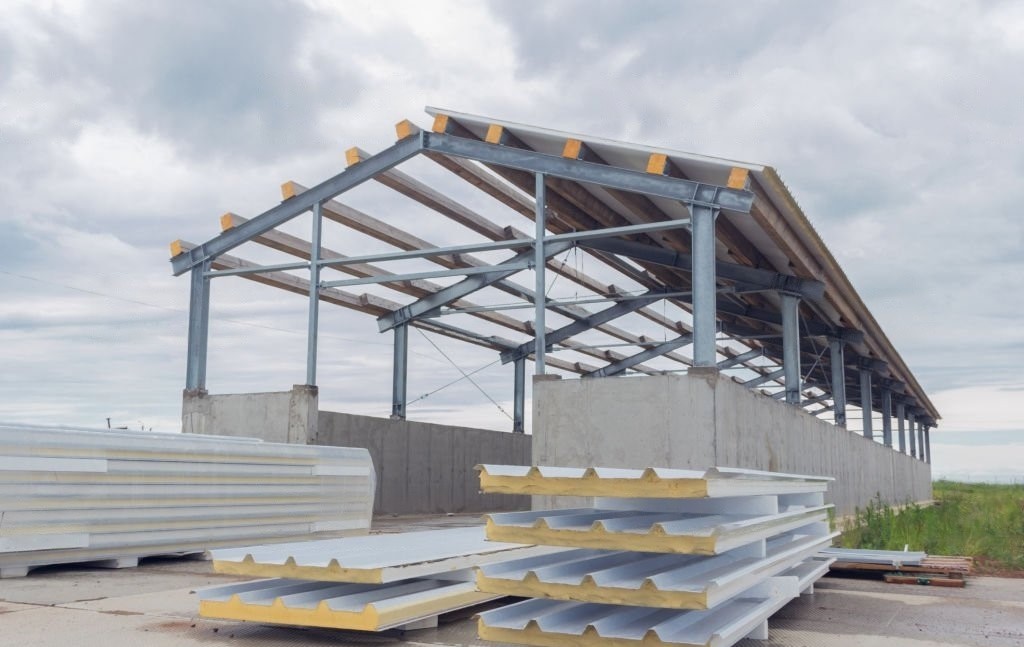
This article explores the advantages, design considerations, and operational efficiencies of large panel construction in prefabricated structures, emphasizing its role in modern architecture.
1. Understanding Large Panel Construction
Large panel construction involves the fabrication of precast concrete, steel, or composite panels in a controlled factory environment before transporting them to the construction site for assembly. These panels can include:
- Wall panels (load-bearing or non-load-bearing)
- Floor slabs
- Roof panels
- Façade elements
The panels are manufactured to precise dimensions, often incorporating insulation, electrical conduits, and fenestration openings, reducing on-site labor and material waste.
Key Characteristics of Large Panel Systems
- Standardization: Components are designed for repetition, ensuring uniformity and ease of assembly.
- Modularity: Panels can be combined in various configurations to create diverse architectural forms.
- Speed of Construction: On-site assembly is significantly faster than traditional methods.
- Quality Control: Factory production ensures higher precision and durability.
2. Efficiency in Design and Construction
2.1. Reduced Construction Time
One of the most compelling advantages of large panel construction is its dramatic reduction in project timelines. Since panels are prefabricated off-site, weather delays and on-site coordination issues are minimized.
- Parallel Processing: While foundations are being prepared on-site, panels are simultaneously manufactured in the factory.
- Rapid Assembly: Crane-assisted installation allows entire building sections to be erected in days rather than weeks.
Case Study: The Plattenbau buildings in post-war Germany utilized large concrete panels to quickly address housing shortages, with some structures completed in just a few weeks.
2.2. Cost Efficiency
While initial setup costs for prefabrication facilities can be high, the long-term savings are substantial:
- Lower Labor Costs: Reduced need for skilled on-site workers.
- Material Optimization: Precise manufacturing minimizes waste.
- Economies of Scale: Repetitive use of standardized panels reduces per-unit costs.
2.3. Sustainability Benefits
- Reduced Waste: Factory production allows for better material management.
- Energy Efficiency: Panels can be pre-insulated, improving thermal performance.
- Reusability: Some systems allow for disassembly and reuse in future projects.
3. Practicality and Functional Advantages
3.1. Structural Integrity and Safety
Large panel systems are engineered for high durability:
- Seismic Resistance: Properly designed connections can enhance earthquake resilience.
- Fire Resistance: Precast concrete panels inherently provide excellent fire protection.
- Load-Bearing Capacity: Can be designed for high-rise applications.
3.2. Flexibility in Architectural Design
Contrary to the misconception that prefabrication limits creativity, modern large panel systems offer:
- Customizable Finishes: Brick, stone, or textured concrete facades.
- Adaptable Layouts: Open-plan designs or modular room configurations.
- Integration with Other Systems: Compatibility with glass curtain walls, steel frames, and hybrid structures.
3.3. Ease of Maintenance and Longevity
- Durable Materials: Precast concrete and steel panels resist weathering and degradation.
- Simplified Repairs: Damaged panels can be replaced without major structural intervention.
4. Operational Simplicity: Streamlining Construction Processes
4.1. Simplified On-Site Operations
- Minimized Skilled Labor Dependency: Assembly requires fewer specialized trades.
- Reduced On-Site Storage: Just-in-time delivery of panels eliminates clutter.
- Enhanced Safety: Fewer workers are exposed to hazardous on-site conditions.
4.2. Digital Integration (BIM & Automation)
- Building Information Modeling (BIM): Ensures precise panel design, clash detection, and logistics planning.
- Robotic Manufacturing: Automated production lines improve consistency and reduce human error.
- Logistics Optimization: GPS-tracked deliveries ensure timely panel transportation.
4.3. Case Example: Singapore’s Prefabricated Prefinished Volumetric Construction (PPVC)
Singapore has mandated the use of prefabrication for public housing, achieving:
- 40% faster construction compared to traditional methods.
- Higher quality finishes due to controlled factory conditions.
- Reduced environmental impact through efficient material use.
5. Challenges and Mitigation Strategies
While large panel construction offers numerous benefits, certain challenges must be addressed:
5.1. Transportation and Logistics
- Challenge: Oversized panels require careful transport planning.
- Solution: Modular breakdown or on-site casting for extremely large components.
5.2. Design Rigidity
- Challenge: Standardization may limit last-minute design changes.
- Solution: Use parametric design tools to allow flexible yet efficient customization.
5.3. Initial Investment
- Challenge: High upfront costs for factory setup.
- Solution: Government incentives and long-term ROI justification.
6. Future Trends in Large Panel Construction
- Smart Panels: Embedding IoT sensors for real-time structural health monitoring.
- 3D-Printed Components: Combining additive manufacturing with panel systems.
- Self-Healing Concrete: Enhancing durability and reducing maintenance.
Conclusion
Large panel construction represents a paradigm shift in architectural efficiency, merging speed, sustainability, and structural robustness. For architects, this method provides a powerful tool to deliver high-quality buildings faster, with greater precision and lower environmental impact.
As urbanization accelerates and housing demands grow, embracing prefabricated large panel systems will be crucial in shaping the future of construction. By leveraging digital tools, automation, and innovative materials, architects can push the boundaries of what prefabrication can achieve—ushering in an era of smarter, more efficient, and more adaptable buildings.