
In the demanding environment of below-grade construction, where moisture, hydrostatic pressure, and structural loads present constant challenges, the selection of insulation is not merely a matter of thermal performance—it is a critical decision impacting the long-term integrity, energy efficiency, and durability of the entire structure. Among the limited options suitable for these severe conditions, High-Compressive Extruded Polystyrene (XPS) Insulation stands apart as the preeminent engineered solution. Its unique combination of structural strength, exceptional moisture resistance, and stable thermal performance makes it the unequivocal choice for architects, engineers, and contractors who cannot afford compromise.
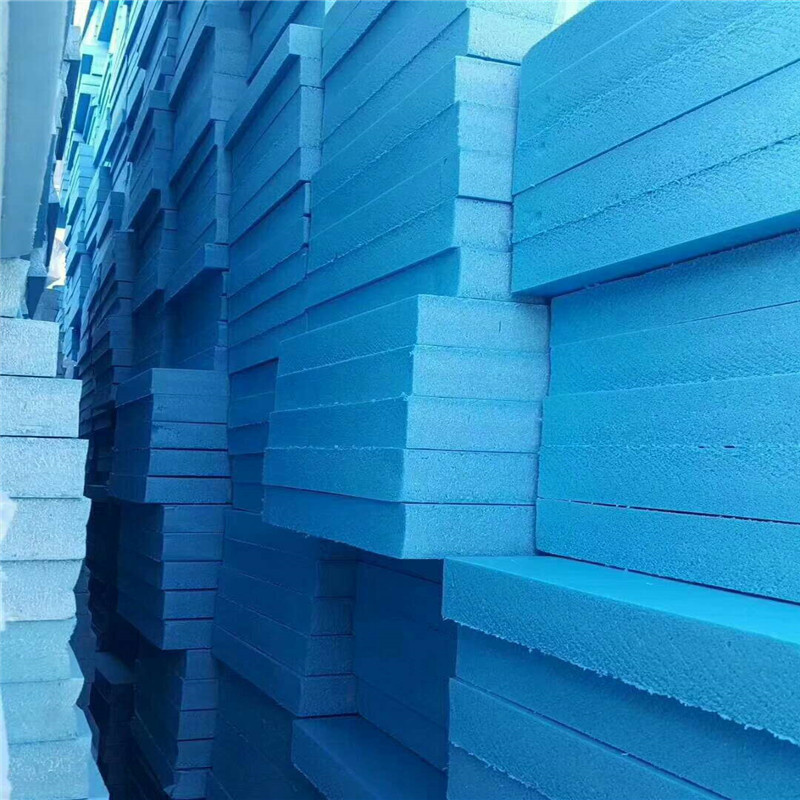
This comprehensive guide explores the scientific properties, application-specific benefits, and economic value of specifying high-compressive XPS insulation for the most demanding below-grade projects, from deep foundations to expansive plaza decks.
1. The Hostile Below-Grade Environment: Why Ordinary Insulation Fails
To appreciate the value of high-compressive XPS, one must first understand the unique stressors present below grade:
- Constant Moisture Exposure: Soil is a perpetual reservoir of moisture, from groundwater to capillary rise. Insulation in this environment is in constant contact with water, leading to the degradation of many materials.
- Hydrostatic Pressure: In water-saturated soils, immense lateral pressure is exerted on foundation walls and under slabs. This pressure can physically crush weak materials, leading to settlement, loss of R-value, and structural compromise.
- Freeze-Thaw Cycles: In colder climates, water absorbed by insulation can freeze, expanding and causing spalling, cracking, and a catastrophic loss of integrity.
- Significant Static and Dynamic Loads: Under-slab insulation must support the weight of the concrete slab, building contents, vehicles, and equipment without significant deformation.
Traditional insulations like fiberglass batts are entirely unsuitable, and even other rigid foams like Expanded Polystyrene (EPS) have limitations in the most severe of these conditions. Failure here is not an option, as remediation costs are prohibitive and often involve excavating the entire building perimeter.
2. The Science of Strength: Deconstructing the Properties of High-Compressive XPS
The superiority of XPS in below-grade applications is not accidental; it is the direct result of its manufacturing process and closed-cell molecular structure.
The Manufacturing Advantage:
XPS is created through an extrusion process where polystyrene crystals are mixed with a blowing agent and forced through a die. This process creates a homogeneous, closed-cell structure with no voids or interstitial spaces. This is fundamentally different from the bead-fusion process of EPS, which can create potential pathways for water.
Key Performance Properties for Below-Grade Success:
- High Compressive Strength (40 psi to 100+ psi): This is the defining characteristic. Measured per ASTM D1621, compressive strength indicates the material’s ability to resist static loads.
- Standard XPS (40-60 psi): Ideal for most residential and commercial foundations, parking garages, and under slabs.
- High-Performance XPS (100+ psi): Specified for extreme applications like airport runways, heavy industrial floors, and beneath deep foundation systems.
This strength ensures the insulation will not crush under load, preventing slab settlement and ensuring a stable, level surface for decades. - Exceptional Moisture Resistance (<0.3% water absorption by volume): The closed-cell structure of XPS acts as a formidable barrier to liquid water. When tested per ASTM C272, high-quality XPS absorbs less than 0.3% of its volume in water. This is critical because:
- It Preserves R-Value: Water is an excellent conductor of heat. When insulation becomes wet, its thermal performance plummets. XPS’s resistance ensures its published R-value of R-5 per inch remains stable for the life of the building.
- It Prevents Freeze-Thaw Damage: With negligible water absorption, XPS is highly resistant to damage from repeated freezing and thawing.
- Long-Term Thermal Resistance (LTTR): Independent testing confirms that the R-value of XPS remains effectively constant over time, even in damp soils. This provides engineers with a reliable, predictable value for energy modeling and code compliance, unlike materials whose performance degrades.
3. Application-Specific Engineering Solutions
High-compressive XPS is not a one-size-fits-all product; it is a system engineered for specific below-grade challenges.
- Foundation Walls:
- Application: Installed on the exterior of the foundation wall, protected by a drainage board.
- Benefit: Creates a continuous thermal break, protecting the concrete from thermal shock and moving the dew point outside the wall assembly. Its strength withstands backfill pressures, and its moisture resistance ensures long-term performance against the damp soil.
- Under-Slab Applications:
- Application: Placed directly on the compacted sub-base or over a vapor barrier, beneath the concrete slab.
- Benefit: Preents heat loss from the building into the ground, a major source of energy inefficiency. The high compressive strength is essential here to support the slab and dynamic loads without deformation, preventing cracking and ensuring a level floor.
- Plaza Decks and Green Roofs (Inverted Roof Membrane Assembly – IRMA):
- Application: In an IRMA system, the XPS is placed above the waterproof membrane, protecting it from UV radiation, physical damage, and thermal cycling.
- Benefit: The XPS must be capable of supporting the overlying pavers, soil, and vegetation while being continuously saturated from irrigation and rainfall. High-compressive, moisture-resistant XPS is the only insulation type recommended for this demanding application.
4. A Comparative Analysis: XPS vs. The Alternatives
- XPS vs. EPS (Expanded Polystyrene): While EPS is a good insulator, its bead-based structure is more permeable to moisture. Its compressive strength is highly variable and typically lower than that of XPS. For a project requiring 40 psi, a much thicker, lower-density EPS board would be needed compared to a standard XPS board, often negating any initial cost savings.
- XPS vs. Polyiso (Polyisocyanurate): Polyiso has a high R-value per inch but is highly susceptible to moisture. Its R-value can drop significantly when wet, and its facers can delaminate in below-grade conditions. It is generally not recommended for direct earth contact or prolonged water exposure.
5. Specification and Installation Best Practices
To ensure optimal performance, specification and installation must be precise.
- Specification Language: Clearly state the required minimum compressive strength (e.g., “Minimum 40 psi compressive strength at 10% deformation or 1% deformation per ASTM D1621”), water absorption limits, and the required R-value.
- Proper Installation:
- Sub-base Preparation: The sub-grade must be smooth, uniform, and free of sharp debris.
- Vapor Barrier: For under-slab applications, a robust vapor barrier should be installed beneath the XPS to protect it from ground gases and sub-slab moisture vapor.
- Staggering Joints: Boards should be installed with joints staggered to minimize thermal bridging.
- Taping Seams: Using manufacturer-recommended tape on the seams can enhance the continuity of the insulation layer and protect the joint during the concrete pour.
6. The Life-Cycle Cost Advantage: Why Cheaper Alternatives Are More Expensive
The initial cost of high-compressive XPS may be higher than some alternatives, but this is a classic case of “paying a little now or a lot later.” The life-cycle cost is overwhelmingly favorable due to:
- Eliminated Remediation Costs: The cost of excavating a failed foundation insulation system is monumental.
- Lifetime Energy Savings: Stable R-value translates to predictable, lower energy bills for heating and cooling.
- Protected Structural Integrity: By preventing moisture-related damage to concrete and steel, XPS safeguards the building’s primary structure.
Conclusion: The Non-Negotiable Standard for Below-Grade Performance
In the high-stakes realm of below-grade construction, where failure is catastrophic and remediation is unthinkably expensive, compromise on material quality is a risk no professional should take. High-Compressive Extruded Polystyrene (XPS) Insulation provides an engineered, proven, and reliable solution that meets the immense physical and environmental challenges head-on. Its robust compressive strength, unparalleled moisture resistance, and stable thermal performance make it the definitive choice for ensuring the longevity, efficiency, and integrity of any structure built from the ground down. By specifying high-compressive XPS, you are not just selecting an insulation; you are investing in the permanent protection of your project.